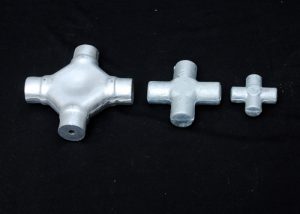
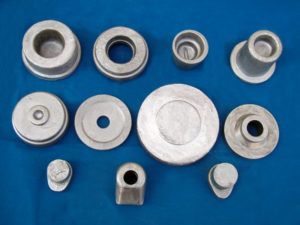
Die forging is a manufacturing method in which a heated metal workpiece is put between precisely formed dies and squeezed under high pressure to achieve the required shape.
The dies regulate the fl...
Close die forging is a manufacturing method in which hot metal is placed in a closed mold and molded under high pressure using a hammer or press. It is commonly utilized to create robust, accurate, an...
Hot forging is a metal forming process that involves heating a metal component over its recrystallization temperature and then shaping it into the desired shape with compressive forces applied by hamm...
Hot forging is based on the notion of shaping a metal by applying compressive forces while heating it over its recrystallization temperature, making it softer and more ductile. In this technique, the ...
Industrial forging is a manufacturing technique that shapes metals into strong and durable components using heat and mechanical force. It is widely employed in several industries, including automotive...
A Forged Hub is a core component or connection point that is made using the forging technique, which shapes metal using heat and pressure to form a strong, durable object.
In mechanical and technic...
A forged ball operates on the premise of transforming mechanical energy into a robust, durable spherical component via the forging process. Forging involves heating a metal billet to a proper temperat...
Grinding media balls are spherical components used in grinding mills to reduce material size via impact and abrasion. They are typically made of high-chrome steel, forged steel, cast iron, or ceramics...
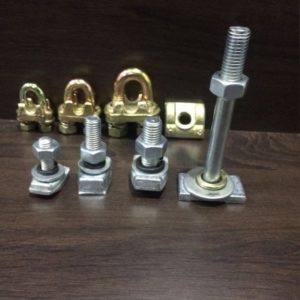
A guide rail clip is used to secure and support guide rails in a variety of mechanical, industrial, and construction applications. It aids with the correct alignment, spacing, and stability of rails w...
A bulldog clamp is a kind of mechanical clamp that is used to securely grasp, hold, or secure objects. It usually consists of two serrated jaws joined by a spring or hinged mechanism that exerts a lot...